
The Neapolitan Nativity Scene

The Neapolitan Nativity Scene
The Neapolitan Nativity Scene has been one of the most established Christmas traditions handed down through generations for centuries. According to some sources, the first representation of the Neapolitan Nativity Scene dates back to 1025 in the Church of Santa Maria del Presepe in the city of Naples.
The word Presepe derives from Latin and means “review with hedge.” This term first appeared in Italy and later in Hungary, and was introduced in Naples only in the 14th century when a descendant of the House of Anjou became King of Naples. The oldest nativity scene is preserved in the Basilica of Santo Stefano in Bologna and consists of several 13th-century statuettes by an anonymous Bolognese sculptor.
The nativity scene soon became a symbol understood above all within families, where the representation of the Holy Family became a ritual. Back in the 18th century, in the city of Naples, the nativity scene began to make its first appearance in noble homes, where entire rooms were set up for the representation of the Nativity, with statues finished in minute detail and dressed in precious fabrics and jewels.
Features of the nativity scene
In 18th-century Naples, the addition of elements from Roman and Greek temples was particularly significant, bearing witness to the triumph of Christianity over the ruins of pagan columns.
One of the most important exponents of the Neapolitan nativity scene tradition was the sculptor Giuseppe Sanmartino, creator of the Veiled Christ, now located in the Chapel of San Severo.
Sanmartino began to skillfully sculpt entire figures in terracotta, giving rise to a veritable school of Neapolitan nativity scenes. One of the most famous Neapolitan nativity scenes is the Presepe Cucinielo, created in the late 1800s and on display in San Martino.
There are about 72 characters in the Neapolitan nativity scene, each with a specific meaning. It is said that the nativity scene originated from the dream of Benino, also known as the sleeping shepherd.
Benino is almost always depicted as a young shepherd: while he sleeps, the shepherd dreams of the nativity scene in which he is the protagonist, and in his sleep the miracle of Christmas and the birth of Jesus Christ takes place.

Characters from the Neapolitan Nativity Scene
Benino
Benino, the sleeping shepherd boy, is considered to be the origin of the Neapolitan nativity scene. According to legend, the entire representation was born from his dream, and it is said that the nativity scene would disappear the moment he awoke.
The figure of Benino symbolizes Christmas, the mystery of birth, and man's spiritual journey toward the light. His tranquility and repose evoke the dreamlike and poetic dimension from which the entire nativity village springs.
The fisherman
The fisherman is one of the most significant characters in the Neapolitan nativity scene. Depicted with a fishing rod, nets, baskets full of fish, and humble clothes, he represents life, work, and daily toil.
His figure also recalls that of Saint Peter, symbol of the fisher of souls, and suggests a deep connection between man's work and the spiritual dimension. The fisherman is the bridge between water and land, between reality and symbol, between material life and inner life.
The Holy Family
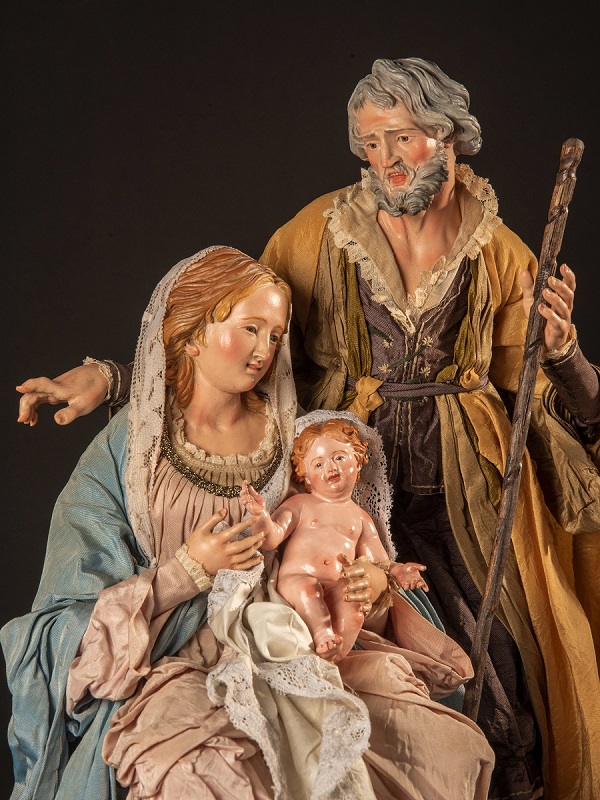
The Holy Family is the beating heart of the nativity scene. At the center is the Baby Jesus, symbol of light and rebirth; next to him is Mary, often dressed in pink or blue, symbol of purity and sweetness; and Joseph, silent guardian and benevolent presence.
On either side or in the background are the ox and the donkey, embodying the opposing forces of Good and Evil, in perfect balance, allowing order and harmony to manifest themselves. This sacred and intense scene is the center around which the entire narrative of the nativity scene revolves.