
About us
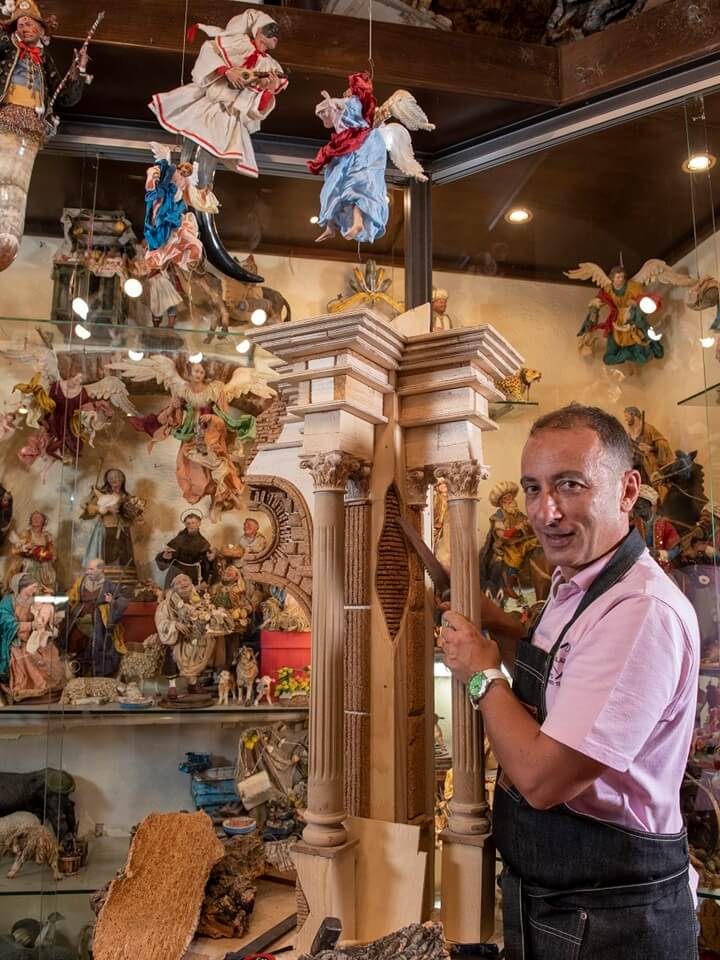
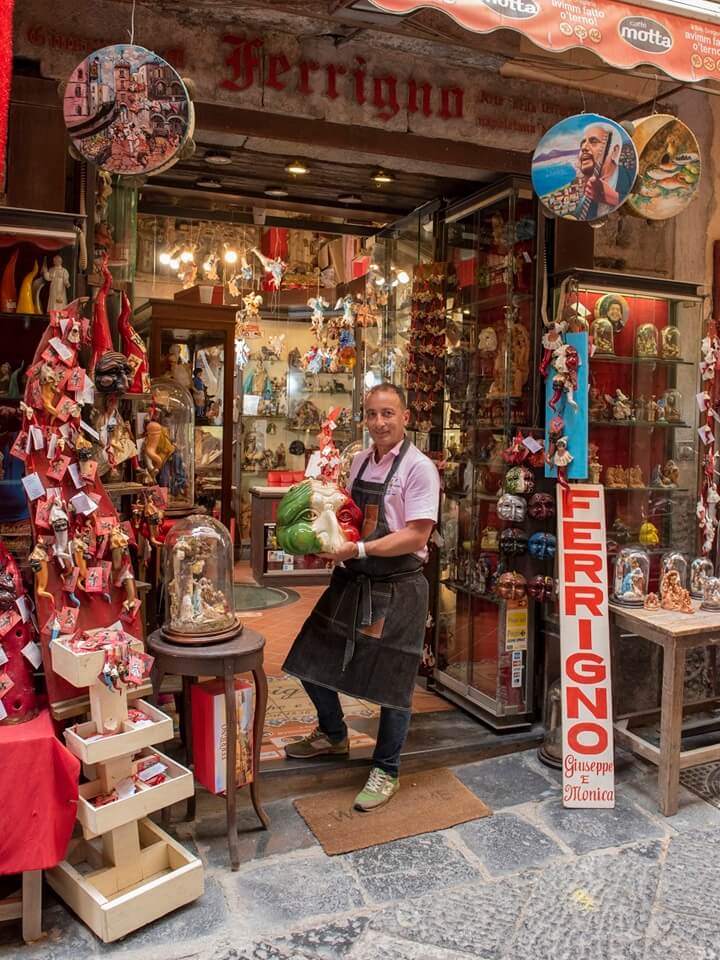
For over 120 years, Giovanni and Monica's Bottega Ferrigno has preserved and passed on the authentic Neapolitan art of nativity scene making, a unique cultural heritage that continues to enchant enthusiasts and collectors around the world.
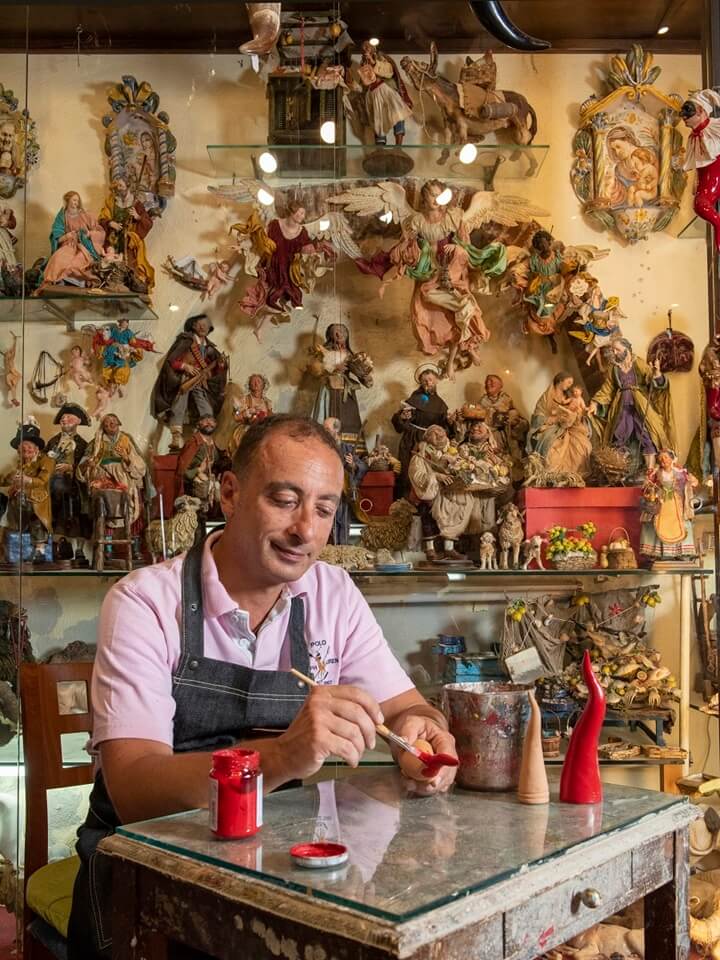
Our creations, from traditional nativity scenes to handmade terracotta figures, are the result of craftsmanship handed down from generation to generation. Each piece is modeled and painted entirely by hand, with attention to detail, love for tradition, and a deep sense of craftsmanship.
Terracotta craftsmanship is an art that requires precision, experience, and techniques handed down over time. The process begins with the creation of the original model, carefully shaped to achieve harmonious forms and realistic details.
OUR PRODUCTS
Symbols and figures of the Neapolitan nativity scene
Pulcinella
Pulcinella, the most iconic mask in Neapolitan tradition, also finds a place in the nativity scene, bringing irony, lightheartedness, and popular spirit.
With his playful attitude and lively character, he adds a touch of cheerfulness to the scene, representing the authentic soul of the Neapolitan people.
His presence harmoniously combines theater, folklore, and nativity scene art, creating a bridge between comedy and tradition.
Lucky Horns
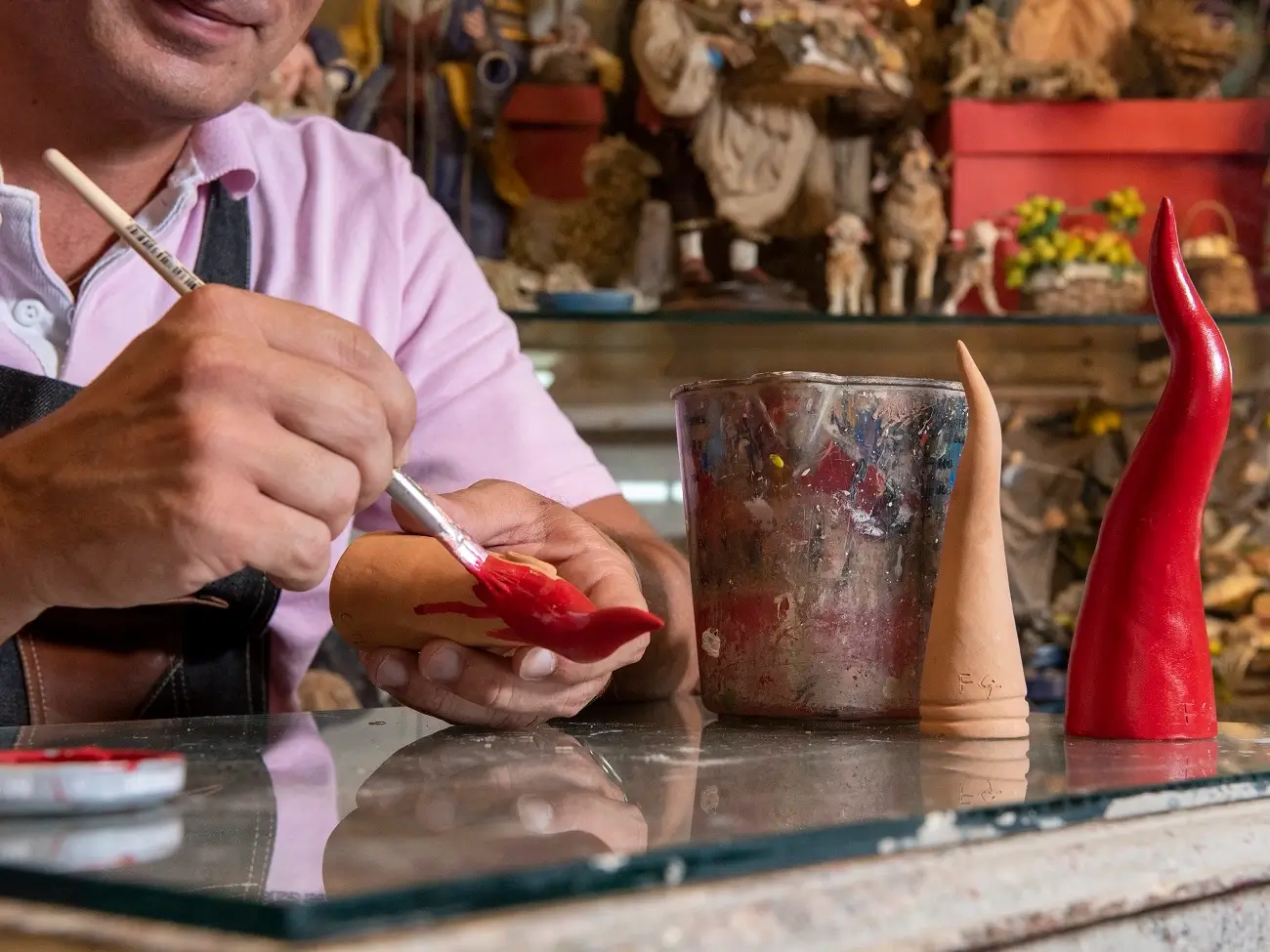
The lucky horn – a symbol of good fortune, protection, and superstition – is one of the most recognizable objects in Neapolitan culture. When placed in a nativity scene, it becomes a decorative element laden with meaning, capable of evoking ancient popular beliefs and rituals against the evil eye.
This red amulet, symbol of positive energy, perfectly represents the encounter between the sacred and the profane, tradition and craftsmanship, making every setting even richer and more evocative.
The Nativity
The Nativity scene represents the spiritual and narrative centerpiece of the Neapolitan nativity scene. The Holy Family—the Baby Jesus, Mary, and Joseph—often accompanied by the ox and the donkey, becomes a symbol of the birth of the Savior and the mystery of Christmas.
This scene, rich in meaning and intense sacredness, is the point from which the entire nativity scene composition develops.
The Animals of the Nativity Scene
The animals in the nativity scene play an important role in the construction of the settings. Carefully placed in natural or rural settings, they reflect the richness of Neapolitan iconographic tradition.
Donkeys, camels, bulls, horses, roosters, pigs, and many other animals populate the landscape, helping to bring a realistic and vibrant world to life. Each animal has a specific place and helps to evoke atmospheres, ancient crafts, and places of the past.
Sciò Sciò
The Sciò Sciò is a humble and symbolic figure, representing the beggar or the wayfarer. An emblem of poverty, fragility, and humanity, it carries a message of hope and faith.
His presence in the nativity scene recalls openness towards the least among us, emphasizing the value of solidarity and the spiritual transformation that accompanies the Nativity.
The Shepherds
Shepherds are the undisputed protagonists of the rural scenes of the Neapolitan nativity scene: they embody the everyday life, simplicity, and devotion of the people.
Each shepherd has a specific role—some bring gifts, some play instruments, some work, and some observe—and each gesture becomes a symbol of rural tradition and popular life. Their figures lend movement, authenticity, and depth to the representation of the entire nativity scene.


The Shepherds of Neapolitan Nativity Scene Art
For years now, the Pastori dell'Arte Presepiale Napoletana (Neapolitan Nativity Scene Makers) have been showcasing the mastery of the artisans of San Gregorio Armeno. Giovanni and Monica have a genuine faith in this work, bringing to the stage, with their creations, a combination of magic, symbols, and tradition in which past and present come together and immerse the viewer in an enchanted world of colors and emotions. The main characters are those of popular tradition: the cobbler, the old woman with chairs, the fishmonger, the innkeeper, the tavern keeper, each depicted in their humble clothes.
The Animals in Giovanni and Monica's Nativity Scene
The first animals began to appear in Neapolitan nativity scenes in the early 1700s: some animal sculptors included the first wooden and terracotta sculptures depicting dromedaries, elephants, and sheep, which were actual statues of animals finished in minute detail. Today, each animal is placed in a well-defined scene, in a timeless dimension of tranquility. This tranquility shines through not only in the animals' expressions, but also in their eyes, made of crystal and set into the wood or terracotta.

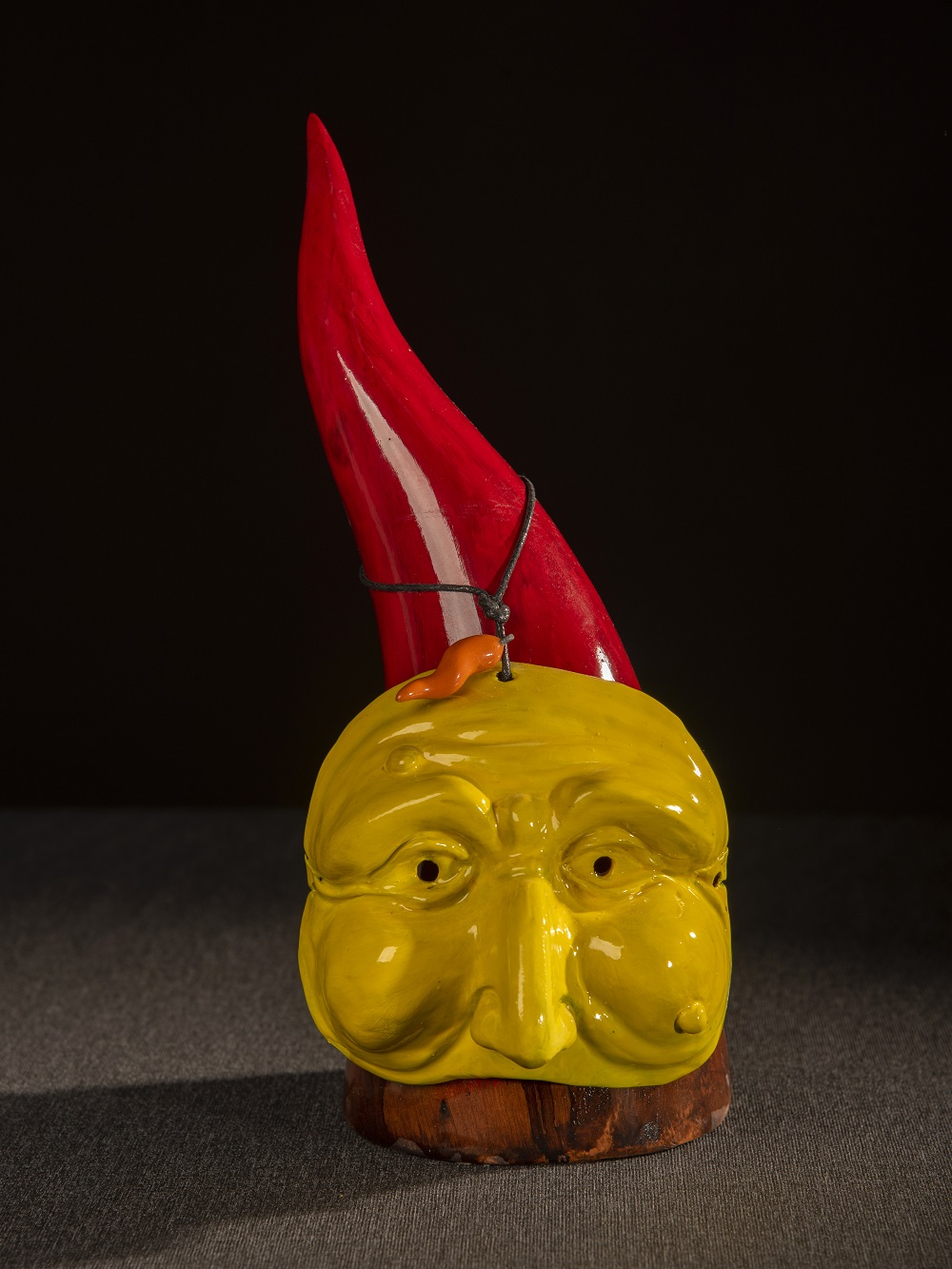
The Horns in the Neapolitan Nativity Scene
The Lucky Horns is one of the most recognizable symbols of Neapolitan tradition. Linked to good luck and protection from the evil eye, it began to appear in Neapolitan nativity scenes in the 18th centuryoften as a small amulet hung in shops or held in the hands of certain characters. Its presence recalls the strong link between the sacred and the profane that characterizes nativity scene art: a lucky charm that tells the story of Naples' popular identity and is still present in the most authentic scenes today.
The Nativity
The The Nativity is the hearth of handcrafted nativity scene in Naplesat the center is the Baby Jesus, surrounded by Mary and Joseph, and often accompanied by the ox and the donkey. This nucleus represents the sacredness of birth and the mystery of Christmas. Since the 18th century, master crib makers have crafted the Nativity scene with extraordinary care, enriching the scene with precious details, fine fabrics, and symbolic figures. Each figurine is designed to convey emotion and spirituality, making the Nativity scene the centerpiece of the Neapolitan crib tradition.


Pulcinella in the Nativity Scene
A character from the commedia dell'arte and universal symbol of Naples Pulcinella also finds a place in the nativity scene as an expression of irony and popular spirit. Eighteenth-century nativity scene artisans began to include him among the shepherds and shops, reflecting a nativity scene that represents not only the Nativity, but also the daily life of the Neapolitan people. Pulcinella embodies joy, satire, and lightheartedness, thus becoming a character who brings cheerfulness to the sacred scene.
Sciò Sciò
Less well known but very characteristic is the Scio Scio, figura tipica del presepe napoletano che rappresenta il mendicante o il viandante affamato. Il suo nome deriva dal lamento che emette, simile a un pianto o a una supplica, e simboleggia la condizione umile e fragile dell’uomo che si avvicina al mistero della nascita di Gesù. Con i suoi abiti logori e l’aspetto sofferente, lo Scio Scio porta nel presepe un messaggio di umanità, povertà e speranza.
